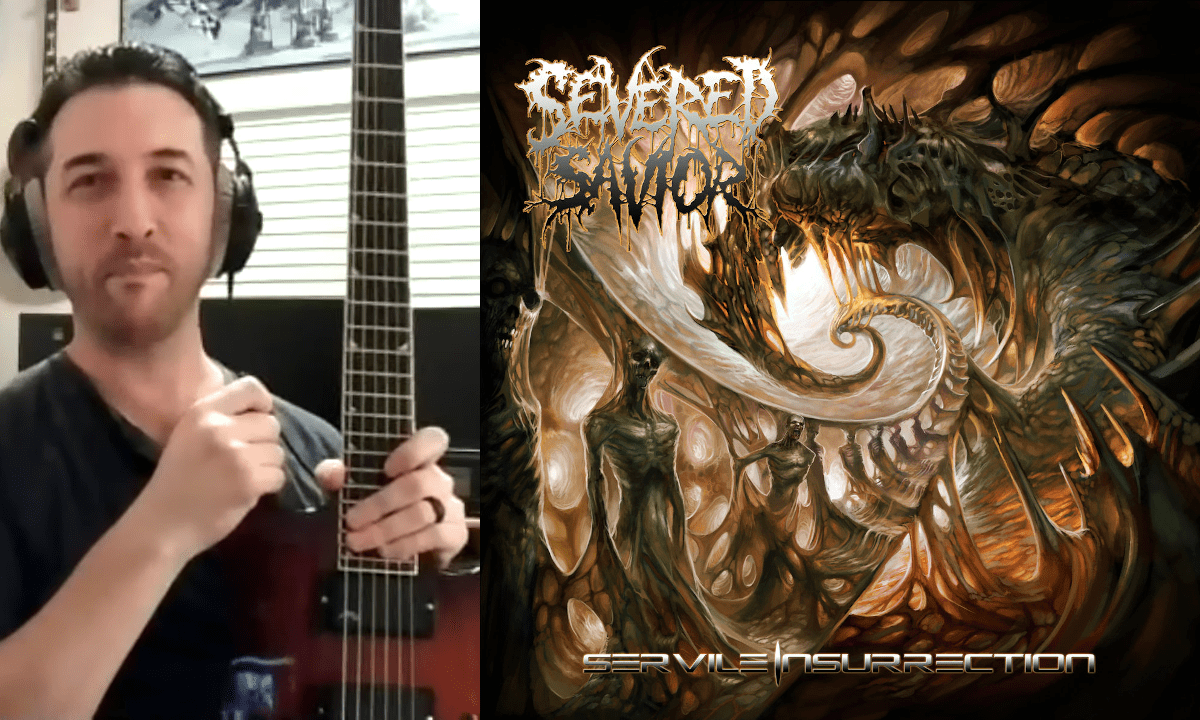
Episode Excerpt: Mike Gilbert (Severed Savior) On Recording Guitars for Servile Insurrection

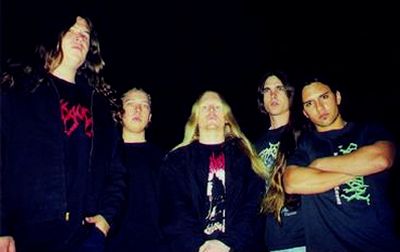
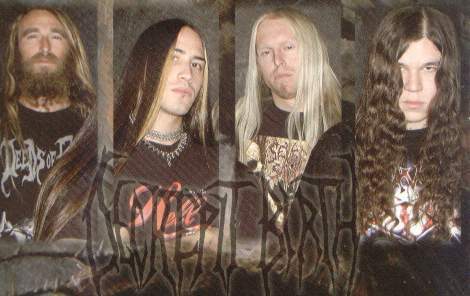
Severed Savior’s Servile Insurrection is one of the classic releases from the California Death Metal scene. Released in late 2008, it is, according to guitarist Mike Gilbert, the first death metal album to be recorded using a Fractal Audio pre-amp/effects processor. However, the story behind the guitar recording on the album includes even more history, as Mike explained to us in Ep. 3.

2:03:09

Josef Kay (2:03:09): Can you guys talk more about the recording of Survile Insurrection and the tones you got for it: what guitars did you use, what amps etc.

Joel Horner: Did you fractal it?

Mike Gilbert: Yes. So, even though I’d like to think I’ve lost the majority of what ego I’ve had in the past, I – I’d like to think i’ve lost most of it – I’m not a narcissist anymore – I would still like to toot my own horn and say that as far as i know, Servile Insurrection was the first death metal album recorded with the Fractal Axe-Fx.

The Original Fractal Axe-Fx.

Joel Horner: Nice.

Mike: This was in 2007, and that’s when I had the very first Fractal Axe-Fx standard. There wasn’t the Ultra yet. It was firmware version 4.05. And halfway through – or actually, um for those of you that don’t know…

I finished recording the album – I recorded all guitars and bass at my house. And then I turned it on one day to start working on leads, and realized that I lost every single file, except for maybe 15 seconds of Inverted and Inserted.

Joel: Because of the firmware update?

Mike: I was learning how to use Cubase as I was recording. And somehow, I had set the location that all of my files, all of my tracks, were being stored in, as the documents folder on my desktop, instead of the folder that i had set aside for all these tracks. So, I was somehow recording or saving project files… and all the tracks were actually being recorded in a random folder in my documents.

And I just remember being stoned one day, and going through ‘my documents’ and saying, “Why do I have 30 gigs in my documents on my desktop? And I just fucking deleted all the music.

Yeah, so I actually paid a service to pick up my hard drive and try to recover all of the files. And the only thing that they were able to recover were some porno pictures I had. That was it – I got my hard drive back, and like 150 nudie girl pictures, and some of the tracks from Inverted and Inserted.

So what tracks were left were maybe 15-20 seconds of Inverted – the second song on the album. And that was recorded with version 4.05 of the original Axe-Fx. I had upgraded to 4.06 and recorded the rest of the album, not knowing or even thinking that the sound would be changed. So there’s a couple of sections in Inverted, if you’re listening with headphones, where there’s a little bit less high end on the guitars. Those were the original only surviving original tracks.

Editor’s note: Can anyone determine which guitar parts are from the original tracking?

Joel: How did you find out about Fractal?

Mike: I was a hardcore gear nerd. In the early 2000s I spent more time with gear and researching gear than actually playing the instrument.

Troy Fullerton: Oh no, that started in the 90s.

Mike: Okay, well –

Troy: Yeah, you were always on a mission.

Mike: I had a GSP 2101. Yeah that was the original. It looked just like the original Axe-Fx, but it was a Digitech unit. Yeah, it tastes crunchy even in milk. Yup that was a killer tone. So I was always a gearhead. I had the Behringer V-Amp 2, which was just a cheap version of a pod, but it was 99 bucks and it sounded killer. And I thought it sounded better than the pod sounds that i was hearing. That’s what I recorded some of those clips on harmony central with.

And then I got ENGL stuff for the [2004 Cannibal Corpse] tour. I had the ENGL E580. It was the chrome plated preamp that was a midi controllable, but all the dials were LED lights around them. I remember that it looked like kind of like the terminator without skin. And then I sold that and bought the ENGL E570 special edition preamp, which is an awesome preamp.

But when Fractal first came out, I was so impressed with the technology. And the dude, Cliff Chase, who designed it, was coming out with updates all the time: you buy this one unit, and twice a month, you’re getting new amp models, new cabinets, microphones. He was constantly improving the technology, which I really appreciated. I got one in mid-spring – it was really close to when it first came out – and was able to get some pretty decent tones out of it. The flexibility, the variety of tones you could get from it, was vastly superior to the the behringer v-amp that i had been using.

Joel: We actually recorded the Odious kitchen demo with a Behringer preamp. It was that the blue Behringer, and it sounds actually killer.

Mike: At the time, mid 2007 or early 2007 or whatever, I was so impressed with the idea of a modeling unit that could sound pretty good and that I could just record with. We’d just done the the demo version for Servile, the song Servile Insurrection, at a studio and my rig was the ENGL E570, a VHT 252 power amp, and a Mesa rectifier cabinet. And the tone was good, but I thought I was getting better tones at home, just plugged in direct. And I also knew I’d have more time and luxury while recording if I wasn’t under the time crunch in a studio – if I could do it at home on my own.

So with the Fractal unit, I found the amp that I liked to record with was the Solo 100 which was based on a Soldano. The cabinet was a Mesa vintage 30 cabinet mixed with a T-75 cab. They’re totally two different sounding cabinets that blend really well together. I used a model of an SM57 mic and a Royer 121, I think it was. And I pretty much set the EQ flat. I knew I didn’t want to set it too close to how I thought it should sound, because I figured once we got it in the mixing process, we’d have to re-EQ the shit out of it. So I just set all the knobs at 12 o’clock for the most part. And by itself, I didn’t think the tone was that good. But once I tracked a separate track, and panned them hard left and right, I thought it sounded pretty good.

Joel: What kind of pickups are in that guitar?

Mike: So the guitar I used for that album was this Jackson SLSMG, which is a Japanese made Jackson that is also neck-through. It has a great heel. I’ve recently stripped off all the lacquer and oiled it, just because that feels better to me. They are APC pickups. I was a member of the Jackson/Charvel forum back in the day and I saw a bunch of people raving about these APC pickups that were made by Mel Lace, the guy who designed the original Lace pickups, and I guess his brother actually owned the patents for them. So there was like a falling out or something, where his brother kept the Lace sensor designs, and Mel the original designer came up with his own company. And they were the first passive pickups that I thought rivaled EMGs for the output and clarity and tightness. And they’re very low noise too, somehow. So the bridge pickup is a persuader lead, and the neck is a syrinx, which I only used for the solo on Deadspeak. Everything else on the album was recorded with this pickup.

We recorded the drums with Zach Ohren, I recorded the guitars and bass and acoustic guitars at my house, and then we brought all that back to Zach. And me and him mixed everything together and we recorded Anthony’s vocals with Zach.

Ep. 12: Cary Geare (Son of Aurelius, AllRealm (who?), &…Odious Mortem?!?)

We did a deep dive into music projects past, present, and future with longtime friend Cary Geare.

Starts at 2:45:50

Some topics we covered in this episode:

  • Meeting Joel & early projects
  • Seeing Odious Mortem for the first time
  • Writing music with KC at the furniture dome
  • Recording the first Son of Aurelius demo
  • Writing 2010’s The Farthest Reaches
  • Touring with bands like Cattle Decapitation and Wretched
  • Odious opening for Necrophagist in SF
  • Changing style for 2014’s Under a Western Sun
  • AllRealm, Cary’s new project with Riley McShane and the Odious guys
  • Cary’s current involvement with Odious Mortem

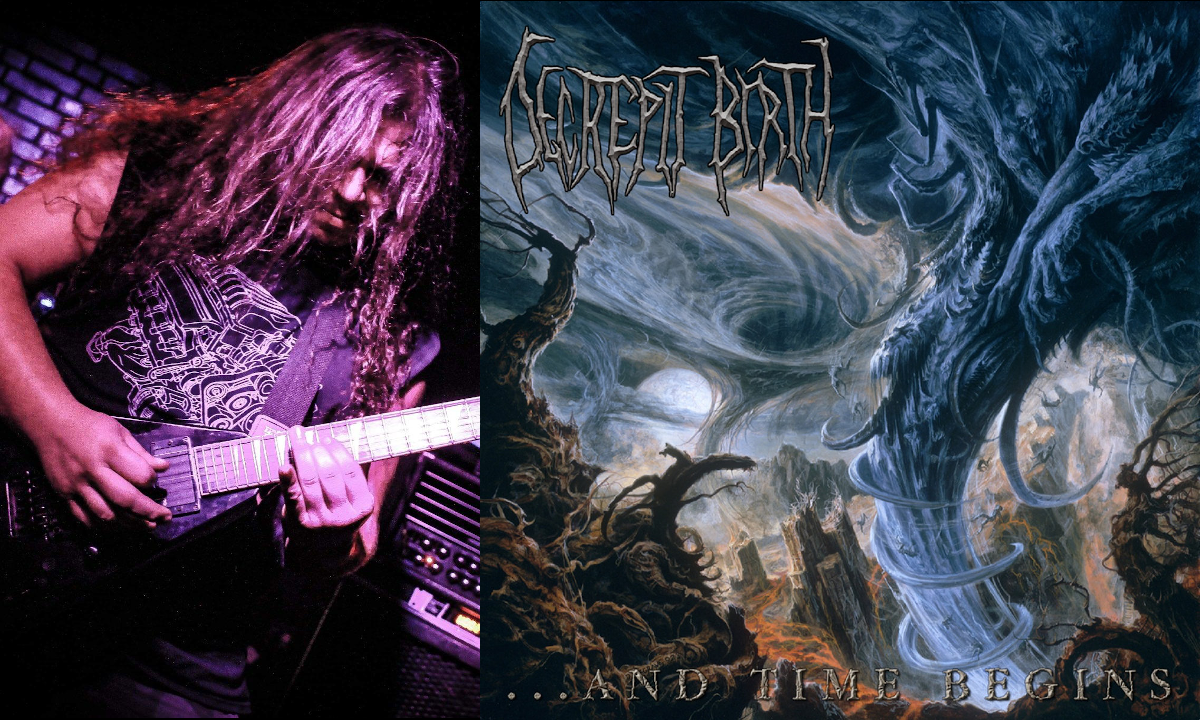
Episode Excerpt: Matt Sotelo on forming Decrepit Birth, creating …And Time Begins

In this excerpt from Ep. 2, Matt recalls the formation of Decrepit Birth, meeting Derek Boyer, and recording 2003’s …And Time Begins in his home studio.

Starts at 5:56

Anthony Trapani (5:56): How old were you when you started wanting to be a vocalist, and be in a band? 

Bill Robinson: Oh, Suffocation came into my life and i was like, “Oh, I could do this.” I just felt like I could do guttural vocals. 

Matt Sotelo: So we had a friend in common, our friend Lee, and he introduced us. Lee was a guitar player that was local; I met him the first night I saw Deeds of Flesh play. And Bill was his friend, and he kept saying, “I got this friend who’s a really sick vocalist.” And I met Bill, he brought Bill over, and I was like 17, I was young and I had all these riffs and i had all these songs and I was ready to go. I was hungry. And this was… the end of 1994, December ’94…

So these guys were older than me by a little bit, and they liked what I was doing. They liked the songs that I was writing. I thought Bill had a killer voice. And our buddy Lee was a pretty good guitar player, and he hung out there with us for a while. Eventually he took off, and me and Bill just stuck with it. And we jammed with local drummers here in Santa Cruz, and nobody could quite pull it quite right. It just wasn’t quite what we were looking for. But we still jammed and tried to get to the point where we were ready to find the right person. This was about like 98 or so. 

[Then] we met Derek Boyer. He was playing with Deeds of Flesh, and we saw him [play live], and we just pushed; we were like, “Hey man, do you know any drummers? We got this music, we’re looking for someone.” And right there we all became friends, and i learned about Deprecated that night. 

Anthony T: So at that point did you guys have any complete songs yet or anything or was it just…?

Matt S: We had songs that were like the first versions of stuff that became on …And Time Begins. It kind of just morphed that stuff, into the ATB stuff. And Derek and I would get together and hang out, and he moved from San Diego, because originally I went down and played with Deprecated for a little while.

Deprecated

And then i was just [wanting to] do my own thing, I think, and I came back to Santa Cruz, and Bill and I were like, “Let’s do this.” Derek’s like, “I’ll move up there and play bass, and let’s record an album.” And I got a little house, and he just moved up into the house with me, and we worked on that shit like every day. Just writing music. I had all these songs, and we kind of dissected them and rewrote them. Derek was coming at me with songs, and Bill had ideas…

We would also spend a lot of time at the Unique Leader house, which was the Deeds of Flesh house. We’d go down there, in Los Osos, and we’d work on music there. Deeds of Flesh would be gone out on tour, and we’d be packing CDs and sending that shit out, and just hanging out and working on music, and just getting the vibe. Anybody who’s been there you get that vibe. So we’re sitting in there, playing this music, writing shit and feeling really good. 

Those guys come back from tour, and Eric was like, “We’re ready to sign you guys if you’re ready to record a full album.” He hooked us up with Tim Yeung, and we got to have him fly out. I had a little makeshift studio out in my backyard at the house that we were all living in. It was like a totally shitty little garage. 

The …And Time Begins lineup: (L-R) Bill Robinson, Tim Yeung, Derek Boyer, Matt Soleto.

[During the drum recording], it was raining, and it was leaking into the garage, in the ground. We’re sitting there, trying to record this record, and we have everything up on pallets. You can see Tim’s playing drums, and the pallets are swishing back and forth, because there’s water rushing in.

But you know, we got it done. Tim recorded it, and at the time I don’t think Tim was too stoked on exactly what we were doing. I think he was kind of like, “This isn’t my cup of tea as far,” as the material goes. Because I think we were doing stuff that not too many other bands were really doing yet. At the time, with all the super technical changes, and you know, the old school death metal was still kind of there, and the new stuff was kind of… 

(15:42): So the drum recording, that was bad, but we we did what we had to do. At the time, I’m not sure how many brutal death metal bands were recording all their albums at home. Maybe there was a few, people were still going into a studio to record their albums. And I was like, “You know what, I’m going to try and do this shit at home.” I had an adapt machine and I had some pretty advanced [digital] home recording equipment. This was like 2001, you know, or 2002. 

We we edited the drums and I’m sure Bill remembers how many hours we fucking took editing those drums. It’s not because the playing was bad, it was because Tim didn’t get a chance to learn that material all the way through. So he would play up to a section or a break, and we had to edit it all. Every single song. Maybe there were one or two songs that he played halfway through, and was able to play the other half. But he was learning these parts on the fly, so we had to button sections together. And so we would record, and we’d have to write all these notes down, where the different drum parts came in. It was a fucking nightmare – I would never want to have to do another album like that. But we were learning. I was in my early 20s at that point, and recording on the computer was very new to me, and I thought it was cool. We were doing what we could do from home. We wanted that real death metal raw recording, so we figured, me and Derek were like, “We can do this.” And even Bill was jumping in, helping us edit. And we all kind of learned together. So that was a lot of fun. We did the guitars and all that stuff at home. But we ended up mixing with Colin from Vile. He mixed and mastered it for us. He did a good job, considering the product that we gave him, so i’m stoked that he was able to to help us. I think that if he didn’t mix and master it, that album would just sound really bad. So I’m stoked with what he did to it. 

Derek and I had an idea of running my digitech system through his bass Sans Amp DI. So we recorded guitar and then EQ’d it with his bass DI, and then ran that out into a power amp, and then out into a cabinet. And that’s what just gave it that… I mean, you could hear i was playing the notes, but for some reason it almost sounds like everything kind of just runs together. It’s like, just a wall of sound with the guitar. It’s too bad, because the guitars could have been a little louder on the recording too. It’s just, it is what it is.

Guitar playthrough of “Condemned to Nothingness”; uploaded to YouTube on Oct 6th, 2006, three days before YouTube was acquired by Google.

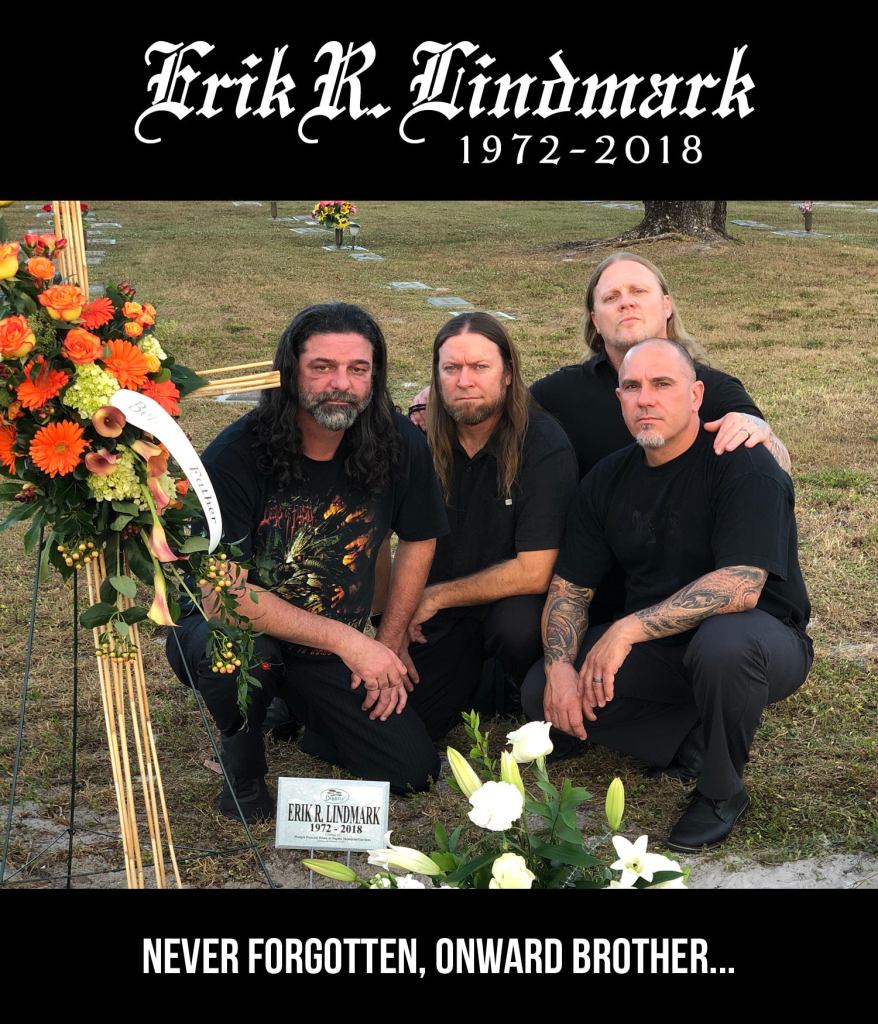
Episode Excerpt: Jacoby and Mike on Erik Lindmark’s Passing

In this excerpt from Ep. 1, Mike Hamilton and Jacoby Kingston of Deeds of Flesh candidly recount hearing of their bandmate Erik Lindmark’s passing.

Starts at 1:26:42

Anthony T (1:26:42): So where do we go from here? We’re basically at the new album…

Jacoby K: All right, the meeting’s over… No! [laughter]

Anthony T: So, you said you started the family and that was how many years [ago]?

Jacoby K: 13 years I was retired… So I got a phone call from Mike and he said, “I don’t think Eric’s doing very well. He’s in the hospital.” And I was like, “Oh crap man, what’s going on?” And I kind of had it in my head, maybe we should fly out and just see him in the hospital. I hadn’t talked to Eric in a lot of years. We had a bit of a falling out because of the label, there was just money issues and stuff. And I felt bad and I was like, “Dude, I kind of left with Eric on a sore note.” So I had it in my mind to go see him.

He was in the hospital for a few days. I really didn’t know how serious it was. He was in the ICU so I knew it was kind of serious. But then he got out of the hospital [and went home],
so in the back of my mind, [I thought] “Okay he’s good, I don’t need to fly out there, he’s okay.”

Two months after that, Matty [Way] calls me up. He’s crying, he’s like, “Dude, Eric just passed away.” I was like, “What?” It was a total shock to my system.

Those two months between when I heard he was in the hospital, to when he died, he was just withering away. And nobody knew it, because Eric, he’s a private guy. He’s a hermit, and he’s not going to tell anybody when he’s hurting.

So it was a crappy thing to find out, basically. And I knew, at the very least, Mike and I were going out for the funeral.

Mike Hamilton (1:28:35): Yeah, I had got a call from Matty, and Matty was like, “Yeah, Eric’s kind of sick, he’s not doing so well.” And like Jacoby said, Eric was kind of a reclusive guy. He didn’t really divulge too much information. He [was the] kind of guy that really would never ask for help.

So we didn’t know at all until it was too late. We got the call, Matty told me like he’s not doing good. And like Jacoby said, like a week later, he’s like, “He’s in hospice and they had the priest come in and read the last rites.” And I was just like…[I] didn’t even know how to digest that; I was just shocked. And then I called Jacoby right after, like, “Hey dude, we gotta get out there.” And so it was, it’s a bummer man.

It’s a testament to: listen to your body. When things start happening to your body [and] you don’t feel normal, go get it checked out. Because, Eric didn’t really… I don’t think he understood what was going on with his body. You know, men are kind of always tough like, “Oh I can tough it out; I don’t need to go get checked out.” And I think that mentality was his ultimate demise, because it was a lot more serious than he thought. So it’s unfortunate that he passed, especially the way he did, because he was such a strong guy, mentally [and] physically. And to have something like that take him down is pretty brutal, you know. So yeah, rest in peace Eric.

Source: Odious Mortem Facebook (Post)

So I felt it was very important for me and Jacoby to step in. His last body of work has to see the light of day, [it] can’t just be put on a shelf…

Anthony T: How long had he been working on it before he had realized he was sick?

Mike H: Well, I don’t know, to be honest. Because the thing is that he had he had moved to Florida. He moved out there for personal reasons. And we would talk on the phone. He called me up and said, “Hey, I’m demoing the new record with Craig and I’m gonna send you some tracks.” I’m like, “Okay cool.” And so I learned the first three songs and then, at that point, I had a family emergency and I had to step down. I was like “I’m in no position to really record,” because my brother had passed, and it was a shock to my family. So I was just like, “I’m not going to be able to be on this record.” But after this thing happened with Eric, me and Jacoby were you know talking at [Eric’s] funeral. We knew we had to come back into the fold and get it done. So we made that commitment to Eric, and to the Deeds fans, and to Maddy, and also to Jamie, that we would do everything we [could] in our power to contribute to this and get it done. So that Eric’s final body of work would be able to be enjoyed by the fans that loved his music so much.

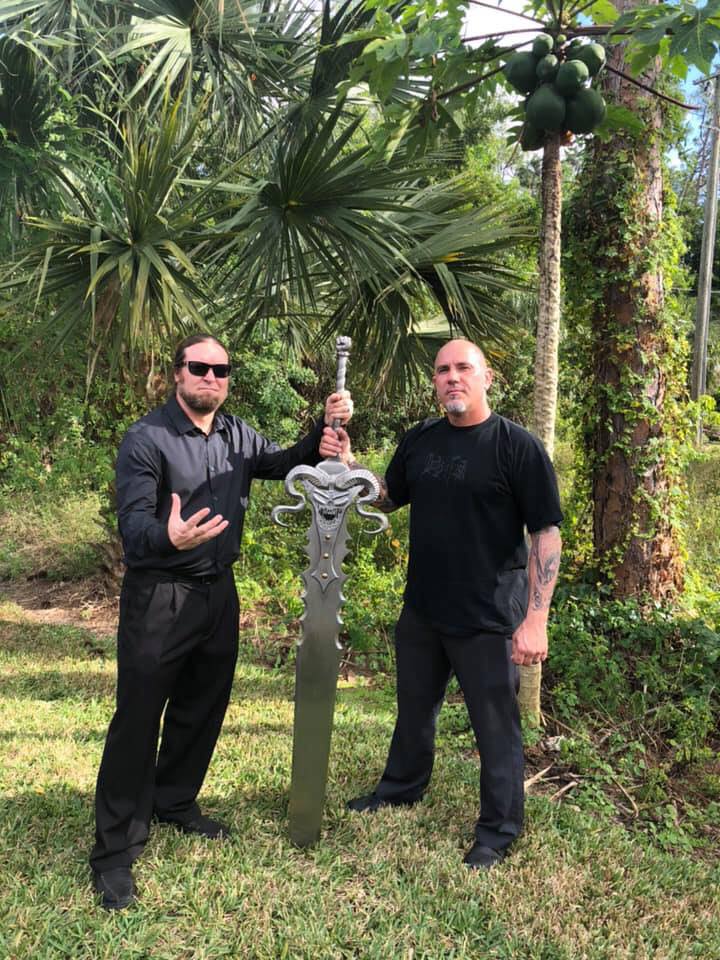
Jacoby Kingston and Mike Hamilton. Source: Odious Mortem Facebook (Post)
Steve Miller, Jacoby Kingston, Matty Way, & Mike Hamilton. Source: Steve E. Miller Facebook (Post)

EP. 11: Defeated Sanity

Cali Death Podcast kicked off 2021 by welcoming on the champions of modern death metal: Defeated Sanity, who assimilated Cali Death influence into their multifaceted and ultimately unique style. Together with drummer & founder Lille Gruber, bassist Jacob Schmidt, and vocalist Josh Welshman, we covered all kinds of topics, including:

  • How Odious Mortem used to listen to 2004’s Prelude to the Tragedy on the way to practice;
  • Wolfgang Teske’s guitar style and how it shines through on 2007’s Psalms of the Moribund;
  • Recruiting A.J. Magaña for 2010’s Chapters of Repugnance;
  • How the band’s songwriting changed with 2013’s Passages into Deformity;
  • Bringing the progressive material from 2016’s Dharmata on the road;
  • How The Police inspired the vocal patterns on 2020’s The Sanguinary Impetus;
    and many more!

Support Defeated Sanity at Big Cartel

Lille Gruber’s Calculated Barbarity (Patreon page)

Episode Excerpt: Jacoby Kingston on starting Deeds of Flesh, recording Gradually Melted

In this excerpt from Ep. 1, Jacoby Kingston recalls his first band, meeting Erik Lindmark, forming Deeds of Flesh, and recording their 1995 EP, Gradually Melted.

Starts at 4:36

Jacoby Kingston (4:36): All right, I’ll go first.

I was like 14, and we were listening to Bay Area thrash metal, and that’s what we wanted to do: me and my buddies, we wanted to start a band doing thrash metal. So, four of us got together [and] we wrote a few riffs.

None of us knew any music; none of us knew any notes or anything like that. We just, you know: one friend grabbed a guitar, the other friend played some drums, and i grabbed the easiest thing i could find, which was the bass because i was just lazy. And we started writing tunes; we were just kids and we started a garage band…

We played a ton of shows, but they were just, like parties and stuff and it was fun. And we were almost leaning towards death metal, but it was thrashy death metal really; it wasn’t even really death metal, but we had a few blast beats in it…

And then, one day this guy, Greg Gard, he’s like this infamous drummer from where i live, he was always a super death metal guy. He gave me Obituary, Slowly We Rot, and that’s when my mind just kind of turned…

I was like, “Dude, that’s some sick stuff right there – that’s what i want to do right there.” And ever since I heard that album, my musical taste kind of darkened…

And I kind of looked at that first band as kind of a, “Well you know, this is fun, but it’s not really what i want to do.” And then i met Eric, because he was in another band called Charlie Christ.

And they weren’t really death metal either; they were kind of thrashy as well. They were more like Kreator, I would say. And then he and I just started hanging out and listening to stuff…

He would show me Gorguts, and then i showed up with like Suffocation or something. And we would just be like geeking out on these old bands that were just super sick at the time. And we were just sitting around going, “Dude, this is what i want to play.” [Eric] looks at me one day, he’s like, “Well dude, you got a fast drummer – let’s get him over and let’s jam. I’m like, “Yeah totally, let’s do that.”

And so we got… all our stuff together, got in his garage, and wrote Three Minute Crawl Space in one session, which is crazy.

Three Minute Crawlspace is the first track on 1995’s Gradually Melted EP.

Anthony T: …Sick…

Jacoby K (6:52): And right then we knew: “Okay, we got to do this, we got to quit what we’re doing. We can’t make this a side project, we got to go all in.” And that’s kind of how it happened: one song [in] the first rehearsal. I think we jammed for like four hours straight, and it felt like an hour, you know what i mean?

(8:00): We wrote the four songs [on] Gradually Melted; I think there [were] actually six songs, but we ended up tossing two of them out and just recorded the four songs, because the label that was kind of interested in us, Wild Rags down in East LA, they were telling us, ”No, just four songs, that’s all we want.” And so we went into this place called Ed Sandor’s studio, and recorded the four songs, one take, all the way through. There was no splicing back then. And, it came out on Wild Rags as a cassette tape.

We were doing the whole snail mail thing with Internal Bleeding, Dying Fetus, and all the guys that were around at that time, doing the snail mail thing. And we just started getting our name out through the snail mail channels, and started playing shows down in LA. And it just grew from there.

I remember playing our first show with Disgorge, and i was outside of the Showcase Theater, just sitting out there, smoking a cigarette or something. And i heard this – I heard them come on. I was like, ”Holy crap what is that?” and i just turned around and saw Matty’s whirlwind going. I was like, “Dang dude, those guys are sick!” And I immediately went in and watched their whole set. And at the end I ran right up to Matty. I was like, “Dude here’s our demo tape,” you know, and he’s like ”Oh dude I know who you guys are, you guys are sick!” And it was like instant friendship after that. I’d even go down to San Diego and hang out with them dudes and stuff, it was pretty cool, but..

It’s just weird, it’s almost like a brotherhood, you know, when you get into this. It’s like, death metal dudes are the coolest dudes i know because they get all their aggression out in the music…

Introducing the Cali Death Blog

Welcome to the Cali Death blog! This blog is associated with the Cali Death Podcast, hosted by Anthony Trapani, Joel Horner, KC Howard, and myself, Josef Kay.

As a musician-writer, I’ve wanted to embark on a writing project that builds upon the content that we create with the Cali Death podcast. Ultimately, I’m interested in a book project that documents the history of the California Death Metal scene. This blog serves as a space to share some writing as I work towards the book project.

Let me begin by introducing myself and describing some of the background behind Cali Death. I am an academic by training, and I currently work as a university lecturer. I am also a musician that plays drums in several bands. Right now I am behind the kit playing for Transcend the Realm (OC Progressive Tech Death), To Violently Vomit (Disgorge continuation project with Diego Sanchez), and Dreamer (LA Extreme Prog Metal). Finally, I am a music teacher, giving guitar and drum lessons to local students.

The Cali Death Podcast is originally a collaboration between myself and my friend KC Howard. Back in the day, KC used to be my drum & guitar teacher; later on, I taught as part of his music school, Visions Music Academy. With the Cali Death Podcast, we wanted to start an ongoing discussion within the California Death Metal music scene that would allow us to talk to some of our musical peers and icons and document the scene’s stories and history. As we launched the podcast, we were joined by KC’s musical collaborators Anthony Trapani and Joel Horner, who became co-hosts and drew upon their extensive social networks to help bring guests to the show. KC handles most of the logistical and technical aspects of podcasting, while I’ve been creating the show flyers and sourcing fan questions.

When we started, we quickly identified four bands that represented the classic “California Death Metal” sound: Deeds of Flesh, Disgorge, Severed Savior, and Decrepit Birth. We were able to bring core members of each of these bands on to talk about their musical careers for our first four episodes, which laid the groundwork for the podcast’s focus and scope.

From the comments and feedback we received from listeners, it became clear that we had hit on something important. The “classic” 2000’s era of California Death Metal has a large fan base who were stoked to hear from these guys, most of whom hadn’t given interviews in many years. Our listeners shared stories of going to concerts, meeting bands and hanging out, and we got to interact with people around the world who had some connection to this scene.

As the podcast continued, with subsequent episodes featuring more musical guests from the CA death metal scene, it struck me over and over again that the musical history we were documenting through verbal account could be chronicled in a variety of additional forms. And as an avid reader and writer, I had the nagging feeling that someone should write a book about all this – a book that tells the history of California Death Metal.

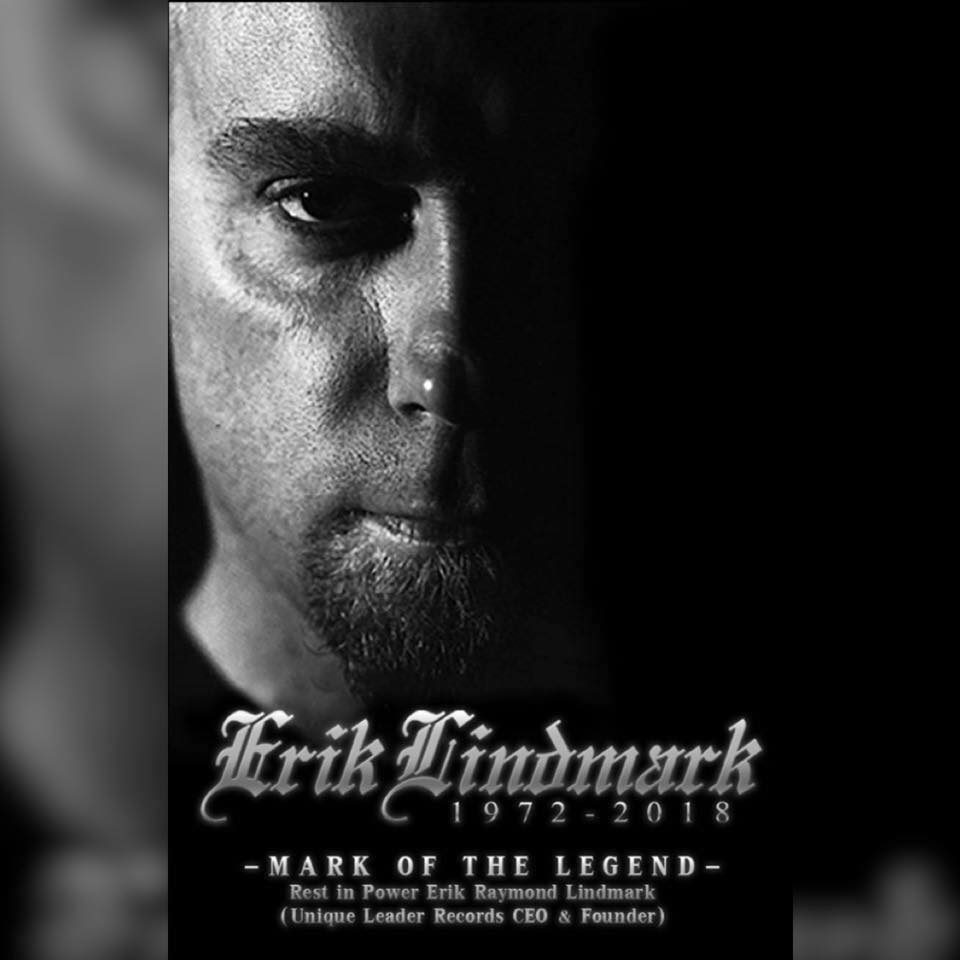
From our very first episode, it struck me that a central figure of this story is Erik Lindmark, co-founder of Deeds of Flesh and Unique Leader Records, who sadly passed away in 2018. I never met Erik, but his influence on the scene was legendary, as he inspired scores of musicians to follow in the footsteps of Deeds and create the most twisted and brutal forms of music possible, while also providing them a platform to record and perform.

From the early albums of the late 1990s, moving into the classic era of the mid-2000s, it is apparent that musicians like Erik Lindmark, Jacoby Kingston, Mike Hamilton, Matt Sotelo, Bill Robinson, Diego Sanchez, Ben Marlin (RIP), Mike Gilbert and Troy Fullerton made major innovations that evolved death metal from the early “old school” sound of Florida and New York into a matured style that featured novel riffing styles, song structures, lyrical themes, and rhythmic forms. At its heart, the Cali Death Project attempts to understand how a scattered group of musicians managed to come together and create a distinctive musical art, weaving together the personal narratives and creative connections that right now exist in scattered form.

So, that’s the idea behind the book project. There are a few books out there about death metal’s history, including Albert Mudrian’s Choosing Death and Daniel Ekeroth’s Swedish Death Metal; I intend the Cali Death book to be similar in kind, though as far as I know, no existing book details CDM in any detail.

This blog exists not just to support the book project, but also as a space for writing related to the Cali Death Podcast and the other projects that we hosts are working on. Stay tuned!